

How to Choose the Right Coral Lighting
Table of Contents
- Understanding Coral Lighting Basics
- Best PAR Levels for Reef Tanks
- SPS vs LPS Coral Lighting Requirements
- Spectrum, Kelvin Temperature, and Wavelength
- Coral Light Acclimation Guide
- Choosing the Right Light for Your Tank Size
- Photoperiod and Light Stability
- Frequently Asked Questions
Last Updated: September 21, 2026
Understanding Coral Lighting Basics
Choosing the right coral lighting is critical. Get it wrong and corals won't grow, fade, and bleach. Get it right and they'll thrive for years.
Light powers photosynthesis in the corals' symbiotic algae, called zooxanthellae (Corals Tutorial: What is Zooxanthellae?). These algae feed the coral and give it color. Without proper lighting, this relationship breaks down.
The most common mistake is treating all corals the same. Different corals have wildly different light needs.
This guide breaks down exactly what corals need from light. We'll show you how to measure it, match it to your specific corals, and avoid the mistakes that kill tanks.
What Corals Actually Need From Light
Corals need light for three reasons: energy (zooxanthellae photosynthesize to feed the coral), growth (higher light intensity drives faster growth), and color (blue wavelengths trigger fluorescence; reds and oranges show natural pigmentation).
How Light Drives Coral Growth and Color
Intensity (PAR, Photosynthetically Active Radiation) and spectrum work together. Blue light (400-500 nm) penetrates deeply and triggers fluorescence. Red light (600-700 nm) enhances natural pigment. Green light (500-600 nm) supports overall health. High PAR with poor spectrum grows corals slowly; excellent spectrum with low PAR won't grow them at all.
Best PAR Levels for Reef Tanks
PAR is the metric that separates guessing from knowing. Measure it, and you know exactly what your corals are getting.
Measuring PAR and PPFD
PAR (Photosynthetically Active Radiation) measures total usable light energy between 400-700 nanometers. PPFD (Photon Flux Density) is the same measurement expressed in micromoles per square meter per second (μmol/m²/s), the number you'll see on your PAR meter.
To measure PAR, point a PAR meter at where your coral will live. This baseline number determines whether your coral thrives or struggles.
PAR Targets by Coral Type
Different corals need different PAR levels. This is where most keepers go wrong.
Soft corals (leather, mushrooms, zoanthids) thrive at 50-150 PAR. LPS corals (Euphyllia, Favia) need 100-250 PAR, with best growth at 150-200 PAR. SPS corals (Acropora, Montipora) demand 200-400+ PAR, with many keepers running 300-400 PAR for best results.
Match your light to your coral mix. For SPS-dominant tanks, use strong lighting. For mixed reefs, position SPS higher and LPS lower to create light gradients.
| Coral Type | PAR Range | Best Growth PAR | Light Tolerance |
|---|---|---|---|
| Soft Corals | 50-150 | 75-120 | Low (bleach easily) |
| LPS Corals | 100-250 | 150-200 | Moderate |
| SPS Corals | 200-400+ | 250-350 | High (need strong light) |
SPS vs LPS Coral Lighting Requirements
The biggest split in reef lighting comes down to this: SPS or LPS dominant?
SPS Corals: High Light and Full Spectrum
SPS corals need 250+ PAR minimum; most keepers run 300-400 PAR. They require strong blue light (actinic wavelengths around 420 nm) for fluorescence plus balanced white light for natural pigment. The best SPS lighting combines high intensity with balanced spectrum, 200+ watts with cool whites and deep blues.
The EcoTech Marine Radion XR30 G6 Pro LED Light delivers 215 watts across 126 LEDs with 10 color channels, covering 30-36 inches with the PAR levels SPS corals demand.

LPS and Soft Corals: Moderate Light Tolerance
LPS corals thrive at 150-200 PAR and tolerate spectrum imbalance better than SPS. Soft corals need only 75-120 PAR; high light stresses them.
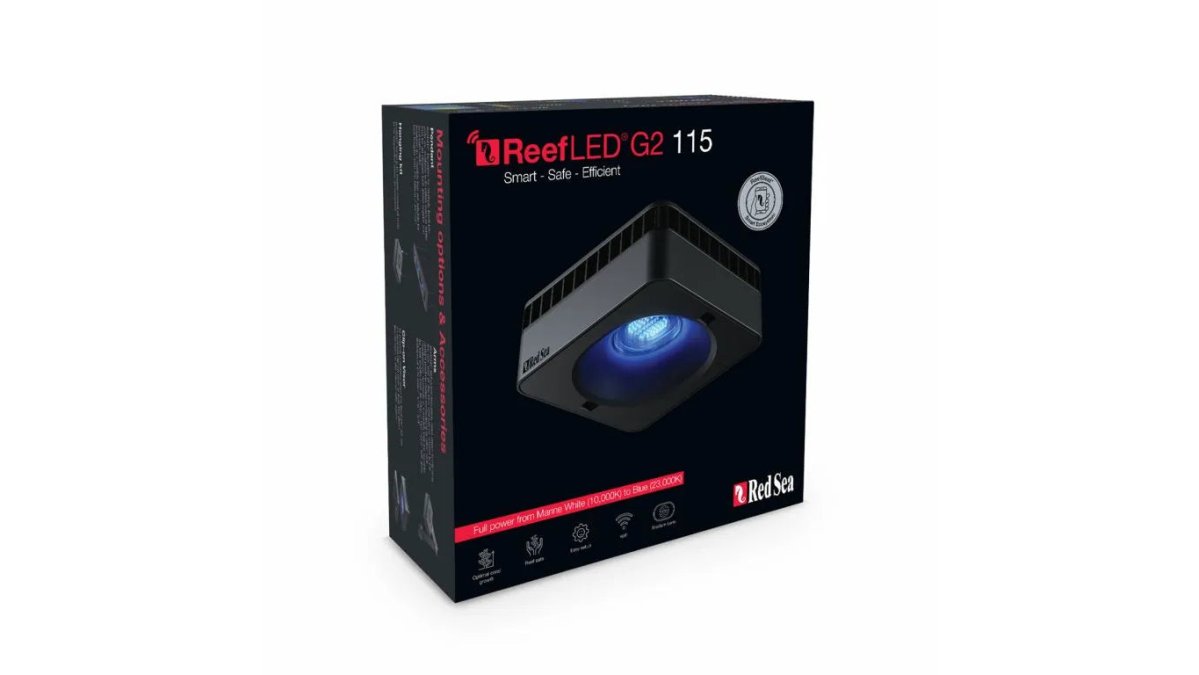
For mixed reefs with LPS and soft corals, you don't need extreme lighting. A mid-range LED works perfectly. The Red Sea ReefLED 115 G2 Light delivers 115 watts with a proven Reef-Safe spectrum. It covers up to 36 inches and produces 150-200 PAR in most tanks. This light is ideal for LPS-dominant systems and mixed reefs.

Spectrum, Kelvin Temperature, and Wavelength
Spectrum is where lighting gets confusing. Three terms dominate the conversation: Kelvin, wavelength, and actinic light. Understanding each one changes everything.
Blue Light and Actinic Wavelengths
Blue light is the most important wavelength for reef tanks. It penetrates water deeper than any other color. It also triggers fluorescence in corals.
Actinic light specifically refers to wavelengths around 420 nanometers. This is deep blue. Actinic light makes corals glow. It's what you see in those stunning reef tank photos where everything looks electric.
But actinic light alone won't grow corals well. It looks amazing but doesn't provide enough energy for photosynthesis. You need actinic blue paired with white light.
EcoTech Marine Radion XR30 G6 Pro LED →
The best lights combine actinic blue (for fluorescence) with cool white light (for growth). This pairing gives you both growth and color.
Full Spectrum vs. Actinic-Only Lighting
This is where most keepers make their biggest mistake.
Full spectrum lights contain all wavelengths: deep blues, light blues, whites, greens, and reds. They mimic natural sunlight. Corals grow well under full spectrum. Colors are natural and balanced.
Actinic-only lights contain mostly blue wavelengths. They make corals fluoresce intensely. But they don't provide enough energy for healthy growth. Corals under actinic-only light grow slowly and eventually bleach.
The solution is simple: use full spectrum as your main light. Add actinic as a secondary light if you want enhanced fluorescence. This combination gives you growth and beauty.
The AquaIllumination Hydra 64 HD LED Reef Light delivers full spectrum across 7 color channels, including 8 cool whites, 8 royal blues, 8 blues, 4 deep blues, plus reds, greens, and UV.

Coral Light Acclimation Guide
This is where most coral deaths happen. New corals shipped from farms or stores are acclimated to their previous lighting. Your tank is different. If you blast them with intense light immediately, they bleach and die.
Step 1: Start New Corals in Low Light
When a new coral arrives, place it in the lowest light area of your tank. If your tank runs 300 PAR at the top, put the coral where it gets 50-100 PAR.
Step 2: Gradually Increase Intensity Over 2-3 Weeks
After the first week, move the coral up slightly. Increase PAR by 50-75 each week.
Step 3: Watch for Light Stress and Bleaching
Bleaching is the sign that light is too intense. The coral loses color and turns white. This means the zooxanthellae are dying.
Choosing the Right Light for Your Tank Size
Tank size determines how much lighting power you need. Bigger tanks need more light to reach the bottom.
Nano and Midsize Reef Tanks (20-40 Gallons)
Small tanks are forgiving. A single LED light covers the whole system.
Standard Reef Tanks (75-90 Gallons)
Most hobbyists run 75-90 gallon tanks. These need more coverage.
Large and Deep Reef Systems (120+ Gallons)
Large tanks need serious lighting. Tank depth matters more than length here.
Photoperiod and Light Stability
Light schedule matters as much as light intensity. Corals evolved with predictable day-night cycles. Mimic that rhythm and your corals thrive.
Setting Your Daily Light Schedule
A standard photoperiod is 12-14 hours of light daily. This matches natural reef conditions.
Ramp Up and Ramp Down (Dawn and Dusk Effects)
Natural reefs don't go from dark to full light instantly. The sun rises gradually. Light intensity ramps up over an hour. It ramps down the same way at sunset.
Frequently Asked Questions
What is PAR and why does it matter for coral?
PAR (Photosynthetically Active Radiation) measures the light wavelengths between 400-700 nanometers that corals and their zooxanthellae actually use for photosynthesis. It's expressed in micromoles per square meter per second (µmol/m²/s). Different corals need different PAR levels: SPS corals typically thrive at 250-400+ PAR, while LPS and soft corals do well at 75-150 PAR. Measuring PAR helps you place corals at the right depth and distance from your light source, preventing both bleaching and poor growth.
Do I need different lighting for SPS vs. LPS corals?
Yes, SPS and LPS corals have very different lighting needs. SPS corals require high PAR (250-400+), full spectrum lighting with strong blues, and stable photoperiods to maintain color and growth. LPS corals prefer moderate PAR (75-150), tolerate more variable light, and benefit from actinic lighting but don't need the intense full spectrum that SPS demands. If you're mixing both types in one tank, position SPS higher in the water column where PAR is strongest, and place LPS lower or in shadowed areas where intensity is reduced.
How do I know if my coral is getting too much light?
Coral light stress appears as bleaching, where corals lose their color and turn pale or white as zooxanthellae die off. You may also see corals closing up or withdrawing polyps during peak light hours, or developing brown jelly disease. If corals appear washed out or have lost their fluorescence within days of introduction, reduce light intensity immediately and ramp it back up more slowly over 3-4 weeks. Stable, gradual acclimation prevents light stress far better than sudden exposure to full intensity.
What spectrum and Kelvin temperature should I use for coral growth and color?
Full-spectrum lighting between 6,500K and 20,000K promotes both coral growth and vibrant coloration. Lower Kelvin temperatures (6,500-10,000K) produce a whiter, more natural daylight look and support overall photosynthesis. Higher Kelvin temperatures (15,000-20,000K) emphasize blues and enhance fluorescence, making corals appear more vivid. Many experienced reefers use a blend: 8,000-10,000K white with 20,000K actinic blue channels to balance growth with color. The EcoTech Marine Radion XR15 G6 Pro and Red Sea ReefLED 115 G2 both deliver this balanced spectrum across 10 color channels.
Related Posts

SPS vs LPS Coral Care Requirements

Design a 75 Gallon Reef Tank: Complete Setup Guide

Coral Acclimation Guide for Hobbyists: 2026 Edition

Professional Reef Tank Installation Cost: 2026 Guide

How to Prevent Fish Disease Introduction: 7 Steps

Troubleshooting Common Reef Tank Problems: 2026 Guide
