

How to Prevent Fish Disease Introduction: 7 Steps
Table of Contents
- Why Fish Disease Prevention Starts Before the Bag Opens
- Saltwater Fish Quarantine Procedure: Your First Line of Defense
- How to Acclimate Saltwater Fish Without Stressing Them
- Aquarium Water Quality Management: The Foundation of Fish Health
- Biosecurity and Sanitation Protocols for Home Aquariums
- Nutrition, Stocking Density, and Stress Reduction
- Monitoring Fish Health and Recognizing Early Warning Signs
- Natural and Sustainable Disease Prevention Methods
- Frequently Asked Questions
Last Updated: September 14, 2026
Why Fish Disease Prevention Starts Before the Bag Opens
Most disease outbreaks trace back to one moment: introducing a new fish without a plan for how to prevent fish disease introduction. Learning how to prevent fish disease introduction is the cheapest, most effective medicine available to any reef keeper, and it starts long before you float that bag. At Blue Earth Corals and Aquariums, we've spent 19+ years helping hobbyists create vibrant underwater ecosystems.
Your display tank is not the problem, the new arrival is. A fish can look flawless in the store bag and still carry a parasite, bacterial infection, or viral load that shows up ten days later, then spreads through every fish you own (pubmed.ncbi.nlm.nih.gov).
Saltwater Fish Quarantine Procedure: Your First Line of Defense
A saltwater fish quarantine procedure means housing new livestock in a separate, isolated tank for a set period before they enter your display system. This single habit prevents most pathogen transmission from reaching your established fish.
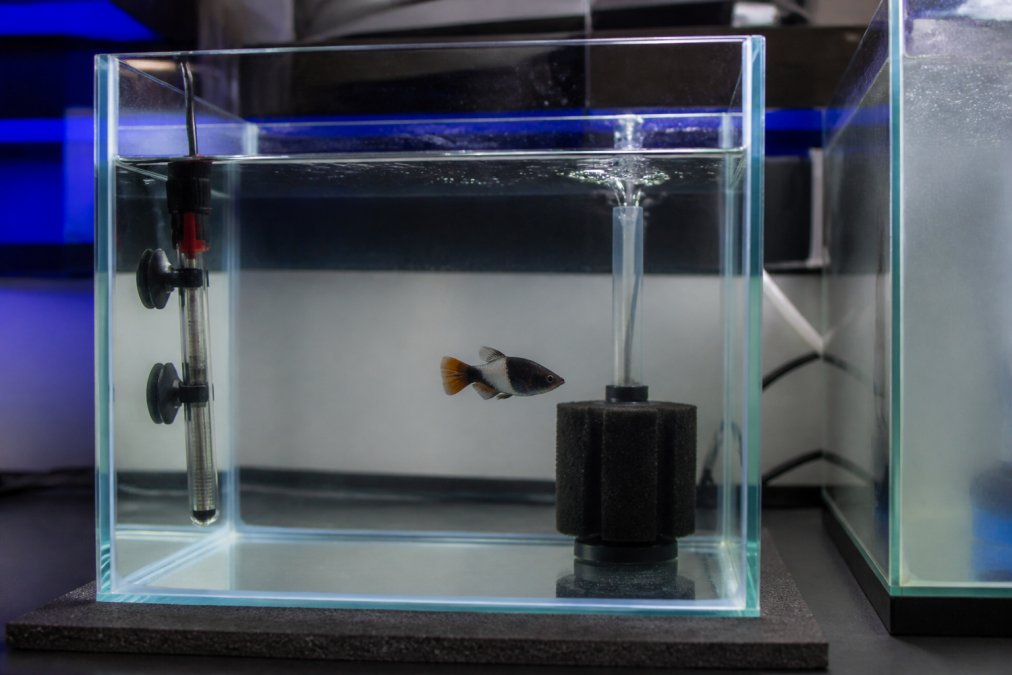
Hobbyist Quarantine vs. Commercial Aquaculture Quarantine
- Home aquarium quarantine is manual and observation-driven: one or two fish at a time, a 10-20 gallon tank, daily visual checks, and a two-to-four week hold.
- Commercial aquaculture quarantine is population-level: biosecure buildings, inflow/effluent disinfection, batch cohorts, and often prophylactic treatments (copper, praziquantel, formalin) on a schedule rather than on observation, protecting inventory where one outbreak can wipe out thousands of dollars of stock.
If you keep a home reef, follow the hobbyist protocol below. Do not copy commercial prophylactic dosing schedules, those drugs are dosed to production volumes and can harm or kill fish in a small tank without a calibrated test kit.
Setting Up a Quarantine Tank
A basic quarantine tank needs five things:
- A tank of roughly 10 to 20 gallons for most fish (larger for tangs, angels, or groupers)
- A simple sponge filter or hang-on-back filter with established bio-media
- A heater set to your display tank temperature, with a thermometer you can read daily
- A few PVC pipe sections for hiding spots
- A lid or screen top, quarantined fish jump more than settled fish
Keep it bare-bottom, no sand, no live rock, no decorations that trap waste. Bare tanks are easier to observe and disinfect, and remove the substrate many parasites use to complete their life cycle.
Cycling a quarantine tank without live rock. This is the step most hobbyists get wrong. Seed the sponge filter in your display sump for two to four weeks beforehand, or dose bottled nitrifying bacteria and feed a small pinch of fish food daily until ammonia and nitrite both read zero on a liquid test kit. An uncycled QT spikes ammonia the moment a fish goes in, worse than no quarantine at all.
Step-by-Step Quarantine Timeline
- Set up and cycle the tank before any fish arrives. Confirm zero ammonia and zero nitrite with a liquid reagent test, not a strip.
- Acclimate the new fish to the quarantine tank, not the display. Use drip acclimation for shipped livestock.
- Observe daily for appetite, behavior, and visible marks. Log what you see, memory is unreliable over three weeks.
- Hold the fish for a full observation period, typically two to four weeks; some keepers extend to 30 days for wild-caught or long-shipped specimens.
- Watch for parasites, bacterial infection signs, and unusual behavior. If symptoms appear, treat in the QT, never in the display.
- Disinfect the QT between batches. Drain it, wipe all surfaces with diluted bleach (roughly 1 part household bleach to 10 parts water), rinse until no bleach odor remains, and air-dry completely.
- Only move the fish to your display after the full period passes clean.
Prophylactic Treatment: When and Why
Some hobbyists run every new fish through a copper or praziquantel course during quarantine; others treat only if symptoms appear. Prophylactic copper is effective against many external parasites but is toxic to some species (notably many wrasses, lionfish, and sharks) and requires a copper test kit to stay in the therapeutic window rather than the lethal one (pubmed.ncbi.nlm.nih.gov). Praziquantel is gentler and targets flukes and tapeworms. If you choose prophylaxis, dose to a measured volume, test daily, and never guess.

A common mistake is cutting quarantine short because the fish "looks fine." Many pathogens show no symptoms until stress triggers an outbreak, and the move to the display is itself a stress event.
How to Acclimate Saltwater Fish Without Stressing Them
Knowing how to acclimate saltwater fish properly reduces the stress that opens the door to disease. Stress weakens the immune system, and a weakened fish is a sick fish waiting to happen.
Drip Acclimation vs. Float Method
The float method matches temperature only. Drip acclimation matches temperature, salinity, and water chemistry gradually, which matters far more for sensitive marine species.
| Method | What It Matches | Best For | Time Needed |
|---|---|---|---|
| Float method | Temperature only | Hardy fish, short trips | 15-20 minutes |
| Drip acclimation | Temp, salinity, pH | Sensitive fish, shipped livestock | 45-90 minutes |
| Isolation box | Temp and gradual exposure | Stressed or aggressive arrivals | Varies |
For shipped livestock, drip acclimation is the safer choice. The IceCap Acclimation Kit makes this straightforward by controlling the drip rate so salinity shifts happen slowly rather than all at once.

If you're dealing with a fish that needs watching before it meets tank mates, an in-tank isolation box lets you observe without a second system. The IceCap 2 Room Isolation Box ($46.19) hangs inside your aquarium and gives new arrivals a calm space to settle.
Aquarium Water Quality Management: The Foundation of Fish Health
Aquarium water quality management is the ongoing practice of testing and adjusting key parameters so fish stay in stable, clean water. Poor water chemistry is the most common hidden cause of disease, stressing fish continuously without obvious warning.
Key Parameters to Test Weekly
- Ammonia: toxic at any readable level; should stay at zero
- Nitrite: also toxic; should remain at zero
- Nitrate: acceptable in low amounts but rising levels signal maintenance gaps
- pH: stability matters more than a perfect number
- Salinity: keep it steady to avoid osmotic stress
- Temperature: swings weaken the immune system
Ammonia and nitrite catch new keepers off guard (the EPA). Both spike in tanks with weak filtration or overstocking, and both burn a fish's gills, leaving it vulnerable to bacterial infection. A mature biological filter converts ammonia into nitrite and then into less harmful nitrate; when it stalls, water chemistry collapses fast.
Biosecurity and Sanitation Protocols for Home Aquariums
Biosecurity in a home aquarium means preventing pathogens from moving between tanks, tools, and hands. The habits are simple, the same principles commercial facilities use, scaled down to a single room.
Hobbyist Biosecurity vs. Commercial Biosecurity
Commercial aquaculture runs biosecurity as an engineering problem: separate buildings per cohort, disinfected inflow and effluent water, footbaths at every doorway, dedicated equipment per room. A home aquarist cannot replicate that, but the underlying logic, break every transmission route, translates directly.
- Water route: never share water between systems. In a commercial facility this is handled by UV or ozone treatment on every line; at home, it means separate buckets and never pouring display water into a QT (or vice versa).
- Tool route: dedicated nets, siphons, and buckets per tank. This is the single highest-impact habit.
- Hand route: wash and dry hands between tanks. Pathogens and parasites can hitchhike on skin and sleeves.
- Livestock route: quarantine every new addition, including corals, invertebrates, and live rock.
- Airborne/aerosol route: cover tanks during maintenance on a sick system, and avoid splashing between adjacent tanks.
Disinfection: What Actually Works
Not all disinfectants are equal, and contact time matters as much as concentration.
- Diluted household bleach (roughly 1 part bleach to 10 parts water) is the workhorse for hard equipment, nets, PVC, siphon tubes, tank walls. Soak at least 10 minutes, rinse until no bleach odor remains, then air-dry. Chlorine residue kills fish; drying eliminates it.
- Isopropyl alcohol (70%) works for small tools, tweezers, and scissors. Wipe, let evaporate fully, then rinse with tank water before use.
- Hydrogen peroxide suits some equipment but is not a substitute for bleach on porous surfaces.
- Hot water alone is not a disinfectant at hobbyist temperatures; it removes debris but does not reliably kill parasites.
Never mix bleach with ammonia-based cleaners, the resulting chloramine gas is toxic to you, not just the fish.
A Simple Between-Tank Routine
- Work on the display tank first, the quarantine tank last. Never the reverse.
- Use a dedicated net and siphon for each system. Label them if you have to.
- After any contact with a sick or quarantined fish, disinfect tools before they touch anything else.
- Wash hands with soap and water, not just sanitizer, between systems.
- Keep a spray bottle of diluted bleach and a clean towel near the QT for quick wipe-downs.
Sterilization between tanks is the step most hobbyists skip. A single shared net can carry a parasite from a quarantine tank straight into your reef. Treat your tools like hospital instruments: clean between every patient.
Nutrition, Stocking Density, and Stress Reduction
Stocking density and diet quietly control disease risk. Crowded tanks and poor nutrition both suppress the immune system, and suppressed fish get sick first.
Feed a varied, high-quality diet suited to each species: herbivores need algae and plant matter, carnivores need meaty foods. A fish on a weak diet has less energy to fight off a parasite or bacterial infection.
On density: more fish means more waste, competition, and stress. Give each fish room to establish territory, territorial aggression compounds everything else, which is where an isolation box earns its keep. The IceCap 3 Room Isolation Box ($57.74) separates an aggressive or bullied fish without pulling it from the system entirely.

Probiotics and immune-supporting foods can help, though results vary by species and system. Treat them as support, not a substitute for clean water and good husbandry.
Monitoring Fish Health and Recognizing Early Warning Signs
Health monitoring means watching your fish closely enough to catch problems in the first days, not the second week. Early detection is where disease prevention pays off.
Visual Identification of Early-Stage Stress
Look for these signals before they become obvious disease:
- Clamped fins held tight against the body
- Rapid gill movement or gasping at the surface
- Hiding when the fish is normally active
- Refusing food
- Flashing or scraping against surfaces
- Faded color or cloudy eyes
- Labored swimming or listing to one side
A fish showing two or more of these signs needs attention now. Move it to isolation, check water parameters, and watch for visible marks like white spots, frayed fins, or lesions. Five minutes of daily observation beats reactive treatment every time.
Natural and Sustainable Disease Prevention Methods
Sustainable prevention leans on stable conditions and strong immune systems rather than reactive medication, aiming for a system where disease struggles to take hold.
Build a mature biological filter before adding sensitive livestock. Keep water chemistry stable. Feed well. Maintain low stocking density. Quarantine everything. These habits do more than any bottle of treatment.
When a problem appears, address the cause before the symptom. If ammonia spiked, fix the filtration. If a fish is bullied, adjust the stocking. Medication without fixing the underlying stress just delays the next outbreak.
For hobbyists who want a second set of eyes, professional maintenance and system design make a real difference. Blue Earth Corals and Aquariums offers custom-built aquarium design, installation, and ongoing maintenance, backed by our aquaculture facility and a full line of Red Sea aquarium systems. Whether you run a standard 75-gallon reef or a larger custom build, the same prevention principles apply.
Disease prevention in a reef tank is a discipline, not a purchase. The keepers who rarely lose livestock quarantine every arrival, test water weekly, and watch their fish daily. If you'd rather hand the hard parts to someone who does this every day, Blue Earth Corals and Aquariums can design, install, and maintain a system built around healthy livestock, with access to quarantined arrivals, professional maintenance, and custom builds tailored to your space. Shop now with Blue Earth Corals and Aquariums and build a tank where disease never gets a foothold.
Frequently Asked Questions
How can fish disease be prevented in a home aquarium?
Preventing fish disease in a home aquarium starts with quarantining every new arrival for 4-6 weeks before adding it to your display tank. Use a dedicated quarantine tank with its own equipment, test water quality parameters weekly, and maintain stable ammonia, nitrite, and nitrate levels. Feed a varied, high-quality diet and keep stocking density low to reduce stress. Regular water changes and sanitizing nets between tanks also cut the risk of pathogen transmission. These steps form a practical fish disease prevention routine that works for any tank size.
Why is a quarantine tank essential for new saltwater fish?
A quarantine tank isolates new saltwater fish so you can observe them for signs of parasites, bacterial infections, or viral outbreaks before they reach your main display. Many pathogens, including marine ich and velvet, only show symptoms after 2-4 weeks. Quarantining also gives you a controlled space to acclimate fish without competition from established tank mates. Skipping quarantine is the single most common way disease enters a healthy reef system. Even a small 10-gallon tank with a simple filter and heater is enough for most hobbyists.
What are the signs of a sick fish that indicate a disease outbreak?
Watch for cloudy eyes, white spots, frayed fins, rapid gill movement, loss of appetite, hiding, or rubbing against rocks. These signs often appear before visible lesions, so daily observation matters. If multiple fish show symptoms within a few days, treat it as an outbreak: test water quality immediately, check for ammonia or nitrite spikes, and move affected fish to a hospital tank. Early detection and quick isolation reduce mortality and protect the rest of your collection from pathogen transmission.
How does proper acclimation reduce the risk of disease introduction?
Proper acclimation reduces stress, which is when fish immune systems are most vulnerable. Drip acclimation slowly matches temperature and water chemistry over 45-60 minutes, giving new fish time to adjust without shock. A stressed fish is far more likely to succumb to a latent parasite or bacterial infection. Using an acclimation kit and avoiding sudden parameter swings helps fish stay strong during their first days in your tank, lowering the chance that a dormant pathogen becomes an active problem.
Troubleshooting Common Reef Tank Problems: 2026 Guide
Professional Reef Tank Installation Cost: 2026 Guide
Related Posts

How to Choose the Right Coral Lighting

SPS vs LPS Coral Care Requirements

Design a 75 Gallon Reef Tank: Complete Setup Guide

Coral Acclimation Guide for Hobbyists: 2026 Edition

Professional Reef Tank Installation Cost: 2026 Guide

Troubleshooting Common Reef Tank Problems: 2026 Guide
