

SPS vs LPS Coral Care Requirements
Table of Contents
- SPS vs LPS Coral: Core Differences Explained
- Coral Lighting PAR Requirements for Both Types
- Water Flow and Movement: SPS and LPS Needs
- Reef Tank Water Chemistry Parameters
- Feeding, Nutrition, and Nutrient Export
- Best Beginner Corals for Saltwater Tanks
- Compatibility, Allelopathy, and Long-Term Maintenance
- Frequently Asked Questions
Last Updated: September 20, 2026
SPS vs LPS Coral: Core Differences Explained
Small polyp stony corals and large polyp stony corals represent two fundamentally different approaches to reef building. Understanding the distinction between sps vs lps coral care requirements is essential before you commit to either type, because their needs diverge dramatically once they're in your tank.
SPS corals, Acropora, Montipora, Stylophora, have tiny polyps that retract into a dense skeleton. They're the crown jewels of reef keeping. LPS corals, Goniopora, Acanthophyllia, Euphyllia, have large, fleshy polyps that extend outward. Both are stony corals that calcify and build skeletal density, but they demand different water parameters, flow patterns, and lighting intensities to thrive.

At Blue Earth Corals and Aquariums, the most common mistake hobbyists make is treating them as interchangeable. They're not. An SPS coral that's thriving in one tank can crash in another because alkalinity drifted by 0.3 dKH. An LPS coral in the same tank wouldn't even notice. This difference alone explains why many reef keepers eventually specialize in one or the other.
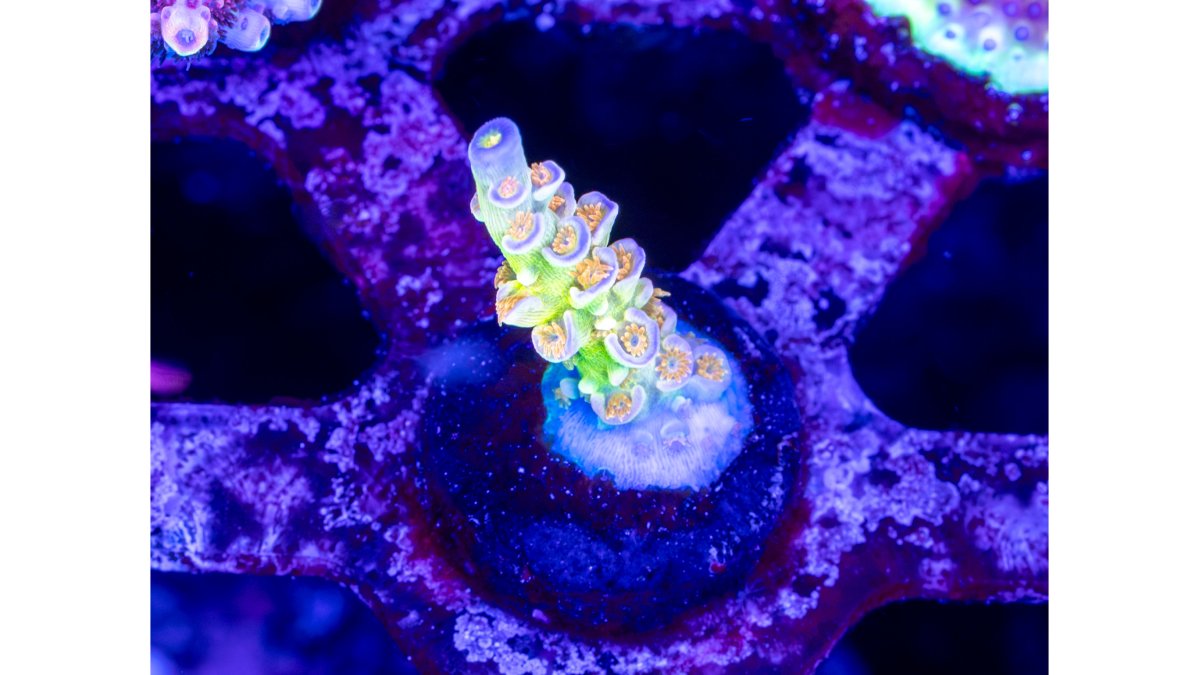
The real divide comes down to three factors: calcification rate, photosynthetic dependency, and water chemistry tolerance. SPS corals calcify faster and depend heavily on zooxanthellae, the symbiotic algae inside their tissue, for energy. They're photosynthetically active organisms that need intense light and stable nutrients. LPS corals calcify more slowly, rely less on light, and can survive on a combination of photosynthesis and heterotrophic feeding. This is why an LPS coral can sit in moderate light and still thrive, while an SPS coral in the same spot will bleach.
| Coral Type | Polyp Size | Calcification Rate | Light Dependency | Flow Needs | Beginner-Friendly |
|---|---|---|---|---|---|
| SPS | Tiny, retractable | Fast | High (zooxanthellae) | Strong | No |
| LPS | Large, fleshy | Moderate | Moderate | Moderate | Yes |
Coral Lighting PAR Requirements for Both Types
Light intensity in reef tanks is measured in photosynthetically active radiation, or PAR. This metric tells you how much usable light energy is reaching your coral. It's the single most important factor separating thriving corals from slowly declining ones.
SPS corals need intense light, typically 250-400 PAR at the coral's location. Acropora, the flagship SPS genus, demands the high end of that range. Without it, polyps retract, colors fade, and the coral enters slow decline. The reason is simple: SPS corals evolved in shallow reef environments where light is abundant. Their zooxanthellae are adapted to high-intensity conditions. Underwater, that means 250+ PAR minimum for most species.
LPS corals thrive on far less. Most species do well at 100-200 PAR. Goniopora and Acanthophyllia can even survive at 75-150 PAR, though they'll color up better with more light. This tolerance is one reason LPS corals suit beginners, you don't need an expensive LED fixture to keep them healthy.

Here's what most guides miss: PAR drops dramatically with depth and distance from your light source. A fixture that delivers 400 PAR at the surface might only deliver 200 PAR 12 inches down. If you're placing SPS corals on a lower shelf, measure the actual PAR at that location, not at the light source. Blue Earth Corals and Aquariums recommends using a PAR meter, they pay for themselves by preventing dead corals.
The lighting spectrum also matters. Both SPS and LPS corals respond to blue and red wavelengths, but SPS corals show more vibrant coloration under high blue (420-450nm). If your goal is color, SPS corals reward intensity. LPS corals look good across a broader spectrum range, which is another reason they're more flexible.
Water Flow and Movement: SPS and LPS Needs
Flow is oxygen, nutrient delivery, and waste removal all in one. Get it wrong and your corals suffocate slowly in their own metabolic waste.
SPS corals demand strong, laminar flow, typically 15-30 times the tank volume per hour (15-30x turnover). An Acropora in a 100-gallon tank needs 1,500-3,000 gallons per hour of flow moving across it. This isn't random turbulence; it's directed, purposeful movement. The reason is metabolic: SPS corals have high oxygen demands and need constant fresh water moving through their branches to supply zooxanthellae and remove waste.
LPS corals need moderate flow, roughly 5-10x turnover. A Goniopora in the same 100-gallon tank does fine with 500-1,000 gph. They're less metabolically demanding and can extract what they need from gentler currents. Too much flow actually stresses LPS corals; their large polyps get beaten around and retract defensively.

The practical difference: if you're mixing SPS and LPS in one tank, you're compromising both. The powerheads needed for SPS will blast LPS polyps. The gentle flow an LPS prefers will starve SPS corals. This is why experienced reef keepers often dedicate separate systems or use strategic placement, SPS in high-flow zones, LPS in low-flow pockets.
Troubleshooting flow problems is where many hobbyists struggle. Dead spots behind rocks, laminar flow that doesn't reach the back wall, and uneven distribution are all common. If your SPS corals are losing polyp extension despite good light and chemistry, flow is usually the culprit. Rearrange your rockwork, add a second powerhead, or reposition your return line. The cost of a new powerhead is far less than replacing dead SPS corals.
Reef Tank Water Chemistry Parameters
This is where SPS and LPS diverge most sharply. Both need stable water chemistry, but SPS corals are unforgiving when parameters drift.
Sexy Corals Orange Passion Acro WYSIWYG →
Blue Earth Corals and Aquariums maintains our aquaculture tanks at these parameters:
- Salinity: 1.025-1.026
- Temperature: 78°F
- Alkalinity: 8.5 dKH
- Calcium: 440 ppm
- Magnesium: 1,350 ppm
- Nitrate: less than 10 ppm
- Phosphate: less than 0.05 ppm
SPS corals need tight alkalinity control, ideally 8.0-8.5 dKH. A swing of 0.5 dKH can trigger bleaching. Why? Because alkalinity drives calcification. When alkalinity drops, the coral's skeleton stops building. Stress follows. Calcium and magnesium support that same calcification process. Low calcium (below 380 ppm) slows growth and weakens the skeleton.
LPS corals tolerate wider swings. Alkalinity at 7.5-9.0 dKH works fine. Calcium at 350-450 ppm is acceptable. They're more resilient because they calcify slower and depend less on constant chemical perfection.
Nutrient export, the removal of nitrates and phosphates, matters more for SPS.
Temperature stability matters for both. A swing of 2-3°F is stressful; more than that triggers bleaching. Use a heater and chiller if your room temperature fluctuates seasonally.
Feeding, Nutrition, and Nutrient Export
SPS corals are photosynthetic specialists. They derive most of their energy from light and zooxanthellae. Feeding them directly is unnecessary and can actually harm them by raising nutrient levels. Your job is to provide light, stable chemistry, and clean water. The coral does the rest.
Best Beginner Corals for Saltwater Tanks
If you're new to reef keeping, LPS corals are your best entry point. They're forgiving, colorful, and rewarding without the precision demands of SPS.
Beginners: Start with Acanthophyllia or Goniopora. They're hardy, beautiful, and teach you the fundamentals without the precision demands of SPS.
Compatibility, Allelopathy, and Long-Term Maintenance
Mixing SPS and LPS corals in one tank introduces a hidden threat: allelopathy. This is chemical warfare between corals. Many corals release compounds that damage or kill neighboring corals. It's invisible until your corals start declining for no apparent reason.
Frequently Asked Questions
What is the main difference between SPS and LPS corals?
SPS (small polyp stony) corals have tiny polyps and require intense lighting, strong water flow, and precise water chemistry stability. LPS (large polyp stony) corals feature larger polyps, tolerate lower light levels, and are more forgiving of parameter fluctuations. SPS corals rely on zooxanthellae for nutrition and calcification, while LPS corals can supplement with direct feeding. This fundamental structural difference drives all their care requirements.
Which type of coral is better for beginners, SPS or LPS?
LPS corals are significantly better for beginners. Species like Acanthophyllia are hardy, can be fed easily, and tolerate moderate flow and lighting. SPS corals like Acropora are highly sensitive to changes in water chemistry and require the most in terms of flow and light, many experienced hobbyists have struggled keeping them long-term. If you're new to reef keeping, start with LPS and establish stable water parameters before attempting SPS.
What lighting PAR levels do SPS corals need compared to LPS?
SPS corals typically require 200-400+ PAR (photosynthetically active radiation) depending on species, with many preferring the upper range. LPS corals thrive at 75-150 PAR and can survive at lower levels. This difference reflects their natural reef positions: SPS corals occupy shallow, high-light zones while LPS corals inhabit deeper, shadier areas. Insufficient PAR causes tissue recession and bleaching in SPS; excess light can stress LPS.
Can you keep SPS and LPS corals in the same tank?
Yes, but with careful planning. The primary challenge is allelopathy, some corals release compounds that harm neighbors. SPS corals generally tolerate mixed systems better than highly allelopathic LPS species. You'll need to balance lighting (SPS needs higher PAR), flow (SPS prefers stronger movement), and placement to prevent tissue recession or polyp damage. Maintaining stable alkalinity, calcium, and magnesium is critical when mixing types, as both depend on these for calcification.
How often should I feed LPS corals compared to SPS?
LPS corals benefit from regular feeding 2-3 times weekly with small food particles or liquid supplements, as they actively extend polyps to capture food. SPS corals rarely require feeding if water chemistry is stable and nutrient export is controlled, they rely primarily on photosynthesis via zooxanthellae. Overfeeding either type raises nitrate and phosphate, degrading water stability and promoting algae growth, which stresses corals and causes color loss.
Design a 75 Gallon Reef Tank: Complete Setup Guide
How to Choose the Right Coral Lighting
Related Posts

How to Choose the Right Coral Lighting

Design a 75 Gallon Reef Tank: Complete Setup Guide

Coral Acclimation Guide for Hobbyists: 2026 Edition

Professional Reef Tank Installation Cost: 2026 Guide

How to Prevent Fish Disease Introduction: 7 Steps

Troubleshooting Common Reef Tank Problems: 2026 Guide
