

How to Improve Coral Health: A Reef Tank Guide
Table of Contents
- Master Water Chemistry for Coral Health
- Why Is My Coral Losing Color: Identifying Stress and Bleaching
- Optimal Water Parameters for Reef Tanks
- How to Acclimate New Corals Properly
- Lighting Intensity and Spectrum for Healthy Corals
- Flow Patterns and Nutrient Export
- Maintain Reefkeeping Logs and Track Seasonal Shifts
- Frequently Asked Questions
Last Updated: September 29, 2026
Master Water Chemistry for Coral Health
Coral health depends on stable water chemistry. While many hobbyists focus on feeding, lighting, or flow, water parameters determine whether corals can build skeletons, extend polyps, and maintain color. Without optimized chemistry, even healthy-looking corals decline.
Many tanks fail because keepers skip regular testing and guess at parameters. The fix is consistent testing and adjustment.
Test Alkalinity, Calcium, and Magnesium Regularly
Alkalinity buffers pH, calcium builds coral skeletons, and magnesium keeps calcium bioavailable. Without adequate magnesium, calcium becomes locked up and unusable despite normal test readings.
Test at least weekly, ideally twice weekly when dialing in a new system. A single large feeding, skipped water change, or unexpected evaporation can swing alkalinity in hours.
The Hanna Instruments marine testing methodology provides accurate, repeatable results that guide your dosing decisions. For alkalinity, calcium, and magnesium testing, digital checkers eliminate the guesswork of color-matching chemical test kits. The HI783 Magnesium Colorimeter measures magnesium from 1,000 to 1,800 ppm with precision, ensuring your corals have access to the trace elements they need. Pair this with regular alkalinity and calcium checks to maintain the calcium carbonate saturation state your corals depend on.
Control Phosphate and Nitrate Levels
High phosphate prevents coral calcification; nitrate accumulation stresses corals and triggers tissue necrosis. Both are invisible until tested.
Tanks creep into high nutrient territory when feeding or maintenance exports nutrients too slowly. Without protein skimmers, refugiums, or macroalgae, phosphate and nitrate accumulate.
The goal is a balance: enough nutrients to support photosynthesis and microbial health, not so much that algae blooms take over. Most healthy reef tanks run phosphate between 0.02 and 0.1 ppm, and nitrate between 5 and 20 ppm. The Journal of Experimental Marine Biology and Ecology has documented how nutrient excess triggers coral bleaching events by disrupting the symbiotic relationship between corals and their zooxanthellae.
The HI774 Phosphate Ultra Low Range Checker (0.00-0.90 ppm, 0.01 ppm resolution) catches phosphate creep early. For automated systems, the Neptune Systems Trident NP integrates with Apex controllers for real-time trending.

Why Is My Coral Losing Color: Identifying Stress and Bleaching
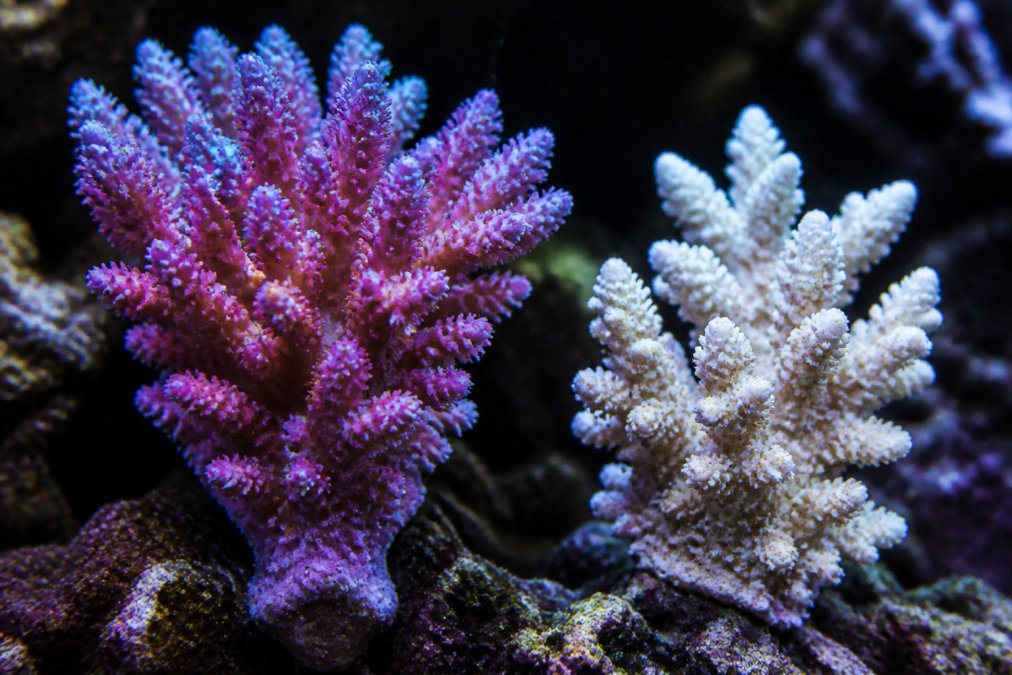
Color loss signals metabolic stress. When corals expel zooxanthellae, they bleach pale or white, a survival response to extreme stress and warning that conditions are intolerable.
Recognizing Early Signs of Tissue Necrosis
Tissue necrosis appears as a dark line advancing across coral tissue. Caught early, isolate the coral, improve water quality, or remove the affected section. Caught late, it kills the colony.
Early signs include polyp recession, mucus production, or color shift to brown or gray. Speed of decline depends on the stressor: water quality crashes accelerate necrosis; mild acclimation stress may allow recovery.
Common causes: phosphate spikes, temperature swings, inadequate flow, or pests. Fixes: nutrient export and water changes for phosphate; heater/chiller adjustments for temperature; repositioning powerheads for flow.
Metabolic Health and Polyp Extension
Polyp extension indicates metabolic health. Full extension means feeding and photosynthesis are normal; retraction signals problems with water quality, lighting, flow, or pests.
Healthy corals extend polyps within 30 minutes of lights-on. If closed during the day, check alkalinity, calcium, and magnesium first, then investigate pests, algae, or flow problems.
Stunted growth signals chronic stress from suboptimal chemistry, inadequate lighting, or poor nutrient balance. Parameters may test acceptable but aren't optimal for your livestock.
Optimal Water Parameters for Reef Tanks
Stability matters more than hitting exact numbers. A pH bouncing from 8.0 to 8.4 stresses corals more than a stable pH of 8.1.
Parameter |
Target Range |
Why It Matters |
|---|---|---|
Alkalinity |
8-12 dKH |
Buffers pH, enables coral calcification |
Calcium |
420-450 ppm |
Skeleton building for corals and coralline algae |
Magnesium |
1,200-1,350 ppm |
Makes calcium bioavailable for uptake |
Phosphate |
0.02-0.1 ppm |
Supports photosynthesis without fueling algae |
Nitrate |
5-20 ppm |
Nutrient for corals and beneficial bacteria |
Salinity |
1.024-1.026 SG |
Maintains osmotic balance for marine life |
pH |
8.1-8.3 |
Optimal for calcification and photosynthesis |
Temperature |
75-78°F |
Metabolic sweet spot for most corals |
Salinity, pH, and Temperature Stability
Salinity creeps up as water evaporates. Without an auto top-off system, even a 0.002 swing stresses corals by disrupting osmoregulation.
A stable pH of 8.0 is better than an unstable pH bouncing between 7.9 and 8.3. Alkalinity testing helps maintain pH stability.
Temperature swings disrupt coral metabolism and reduce photosynthetic efficiency. Summer heat creep is a common killer in tanks without chillers.
Phosphate Ultra Low Range PPM →
The Role of Auto Top Off Systems
An auto top-off (ATO) system automatically adds freshwater to maintain stable salinity. Without one, manual top-offs are forgotten or salinity drifts.
An ATO is foundational equipment for serious reef keepers. It uses a float switch or optical sensor to maintain consistent water height and salinity, paying for itself in reduced coral stress.
How to Acclimate New Corals Properly
New corals arrive stressed from shipping. Poor acclimation compounds stress and often kills the coral within days. Proper acclimation gives the coral time to adjust.
Step-by-Step Acclimation Protocol
Float the coral in its shipping container for 15-20 minutes to equalize temperature. A sudden 5-degree change triggers stress.
Begin drip acclimation using airline tubing at one drip per second. This gradually mixes tank water with shipping water over 1-2 hours, using 3-4 times the original shipping water volume.
Transfer the coral to quarantine or a low-flow display area. Place it in dim lighting (30-50% intensity) for one week, then gradually increase over 7-10 days to avoid photosynthetic shock.
Monitor for two weeks. Extended polyps and normal coloration indicate success. Closed polyps or tissue necrosis suggest parameter mismatch or arrival stress.
Quarantine and Pest Identification
Quarantine for 2-4 weeks to prevent introducing pests like flatworms, nudibranchs, bristle worms, and hydroids, which can devastate colonies.
Inspect new corals under magnification for moving creatures, white spots, or unusual growths. Flatworms appear as thin organisms; nudibranchs as tiny slugs. Dip pest-infested corals in quarantine bath before isolation.
In quarantine, observe polyp extension and tissue health. Healthy corals extend and feed; stressed or infested corals show retracted polyps or necrosis. Quarantine confirms parameter adaptation before main tank introduction.
Lighting Intensity and Spectrum for Healthy Corals
Light drives photosynthesis in the coral's zooxanthellae. Without adequate light, corals can't generate enough energy to build skeletons or maintain color. Too much light, especially without proper acclimation, causes bleaching. The goal is matching light intensity and spectrum to your specific coral types.
PAR Levels and Photosynthesis Optimization
PAR (photosynthetically active radiation) measures the light wavelengths corals actually use for photosynthesis, expressed in micromoles per square meter per second (µmol/m²/s). Different corals need different PAR levels. LPS (large-polyp stony) corals typically thrive at 100-200 PAR. SPS (small-polyp stony) corals need 200-400 PAR. Soft corals often do well at 50-150 PAR.
Measuring PAR in your tank reveals whether your lighting matches your coral placement. A PAR meter shows you exactly where high-light and low-light zones exist.
Flow Patterns and Nutrient Export
Flow serves two purposes: it delivers oxygen and nutrients to corals, and it exports waste products (detritus, excess nutrients) out of the tank. Inadequate flow creates dead zones where detritus accumulates, phosphate spikes, and corals experience localized stress.
Maintain Reefkeeping Logs and Track Seasonal Shifts
Keeping detailed records of your water parameters, coral growth, and maintenance actions reveals patterns that casual observation misses. A simple spreadsheet with dates, alkalinity, calcium, magnesium, phosphate, nitrate, pH, and temperature creates a data trail that guides your adjustments.
Frequently Asked Questions
What keeps coral healthy?
Coral health depends on stable water chemistry (alkalinity, calcium, magnesium, phosphate, nitrate), appropriate lighting with correct PAR levels, consistent flow patterns, regular acclimation, and proper nutrient balance. Testing water parameters weekly and maintaining detailed reefkeeping logs helps catch problems early. Most importantly, avoid rapid swings in temperature, salinity, or nutrient levels, which stress coral tissue and trigger bleaching or metabolic decline.
How often should I test my reef tank water to ensure coral health?
Test alkalinity, calcium, and magnesium at least weekly to maintain optimal water parameters for reef tanks. Phosphate and nitrate should be tested every 7-10 days, as these nutrients directly affect coral color and growth. Automated testers like the Neptune Systems Trident can measure parameters daily or multiple times daily, providing real-time data to prevent algae blooms and nutrient swings that compromise coral health.
How does proper acclimation affect the survival rate of new corals?
Proper acclimation reduces shock and tissue damage when corals transition from supplier conditions to your tank. Drip-acclimate new corals over 30-60 minutes to match your tank's salinity, pH, and temperature gradually. This allows their microbial associates and bacterial mutualists to adjust without triggering bleaching or necrosis. Corals acclimated correctly show polyp extension within 24-48 hours; those acclimated too quickly often die within a week.
What are the most common mistakes that lead to coral decline?
The biggest mistakes are skipping regular water testing, ignoring early signs of tissue necrosis or polyp retraction, and failing to control phosphate levels. Sedimentation from poor flow, inadequate lighting intensity, rapid parameter swings, and introducing pests without quarantine also cause decline. Many hobbyists also overlook the importance of trace elements like magnesium and iron, which support photosynthesis and metabolic health even when alkalinity and calcium appear normal.
Why Corals Die After Introduction: Prevention Guide
Coral Fragging for Beginners: Step-by-Step Guide
Related Posts

Coral Fragging for Beginners: Step-by-Step Guide

Why Corals Die After Introduction: Prevention Guide

Living Art Aquariums vs Corals.com: Which Fits Your Reef?

Reef Tank Design for Small Spaces: A How-To Guide

Stable Reef Water Parameters: A 2026 How-To Guide

Avoiding Coral Shipping Damage: 7 Proven Tips
