

Best Saltwater Fish for Beginners in 2026
Table of Contents
- What Makes a Saltwater Fish Beginner-Friendly
- Top 5 Best Saltwater Fish for Beginners in 2026
- Best Saltwater Fish for 20 Gallon Tank Setups
- How to Acclimate Saltwater Fish the Right Way
- Saltwater Aquarium Setup for Beginners: Essential Gear
- Avoiding Common Beginner Mistakes
- Sourcing Fish Ethically: Captive-Bred vs. Wild-Caught
- Final Thoughts on Choosing Your First Fish
- Frequently Asked Questions
Last Updated: September 4, 2026
Starting a saltwater tank is one of the most rewarding decisions a hobbyist can make, yet the most common reason new tanks fail is poor fish selection. The best saltwater fish for beginners 2026 are species that tolerate minor water chemistry swings, eat prepared foods readily, and stay peaceful in a community setting. At Blue Earth Corals and Aquariums, our team has spent 19+ years culturing and keeping marine life, and we have seen which species thrive in novice hands versus which ones crash a brand-new system.
Choosing your first fish is not about picking the flashiest specimen. It is about setting up a chain of small wins that build your confidence as a saltwater hobbyist. A fish that survives acclimation, eats within 48 hours, and lives for years is worth more than a showpiece that stresses at the first sign of nitrates. Below, we break down the top picks, the gear you actually need, and the mistakes that sink most new aquariums before their first anniversary.
What Makes a Saltwater Fish Beginner-Friendly
A beginner-friendly saltwater fish must survive the steep learning curve of a maturing tank. The defining traits are hardiness, a peaceful temperament, and an adaptable diet that does not demand live foods or constant grazing.
Water parameter stability is the real test. New tanks experience ammonia and nitrite spikes during the nitrogen cycle, and even after cycling, nitrate levels fluctuate as the bioload adjusts. Hardy species like clownfish and gobies handle these swings without succumbing to marine parasites or stress-related disease. They also tend to stay small, which keeps their bioload low and reduces the demand on your filtration system and protein skimmer.
Temperament matters just as much as resilience. A territorial damsel may survive anything, but it will terrorize every new addition. The ideal first fish minds its own business, stays visible, and does not bully tank mates. Most importantly, these species accept flake, pellet, and frozen foods, which means you will not need to culture live brine shrimp to keep them alive.
Top 5 Best Saltwater Fish for Beginners in 2026
These five species represent the sweet spot between beauty, hardiness, and ease of care. Each one has specific needs, but all of them forgive the occasional mistake that new saltwater hobbyists inevitably make.
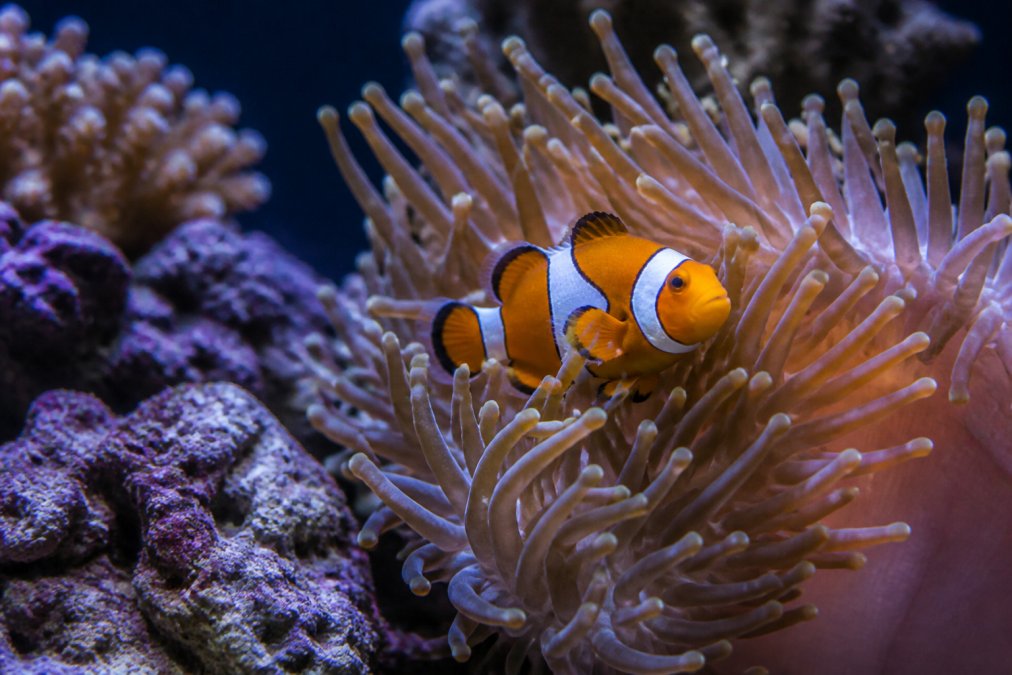
Ocellaris Clownfish: The Reliable Classic
The Ocellaris clownfish is the gold standard for saltwater fish for beginners, and for good reason. These fish are captive-bred in large numbers, which means they arrive healthy, eat flake food immediately, and have never been exposed to the stress of wild collection.
They stay around three inches, making them suitable for tanks as small as 20 gallons. Their peaceful temperament allows them to cohabit with gobies, cardinals, and most other docile species. The only real caution is that they will defend their host anemone or corner of the tank, but this aggression rarely causes real harm.
Royal Gramma: Colorful and Peaceful
Royal grammas bring a burst of purple and yellow to a tank without the territorial baggage of many other basslets. These fish are naturally shy, so they appreciate plenty of live rock and aquascaping with caves and overhangs.
They are planktivores in the wild, but they adapt readily to prepared foods. The main challenge is that they can be reclusive for the first week. Once they realize the tank is safe, they become bold and hover near the front glass at feeding time. They rarely exceed three inches and mix well with most peaceful community tanks.
Firefish Goby: A Hardy Shoaling Species
Firefish gobies are the best choice for hobbyists who want movement and color without aggression. Their elongated bodies and flowing dorsal fins make them stand out, and their habit of hovering mid-water adds constant activity.
They are naturally shoaling fish, so keeping two or three together works well in larger tanks. Firefish are jumpers, so a tight-fitting lid or mesh screen is non-negotiable. They accept most small pellet and frozen foods and are remarkably resistant to the common diseases that plague less hardy species.
Yellow Watchman Goby: The Sand Sifter
The yellow watchman goby earns its place by keeping your substrate clean. These fish constantly sift sand through their gills, aerating the substrate and preventing dead spots where anaerobic bacteria can thrive.
They form fascinating mutualistic relationships with pistol shrimp, which is a behavior that will entertain you for years. They stay under four inches and are completely peaceful. The one requirement is a sand bed of fine particle size; coarse gravel will damage their delicate gill rakers.
Banggai Cardinalfish: Calm and Easy to Feed
Banggai cardinalfish are the calmest species on this list. They hover in place with a gentle rocking motion and never harass their tank mates. Their distinctive vertical stripes and long fin filaments make them a visual centerpiece.
These fish are almost entirely captive-bred now, which has taken pressure off wild populations. They eat any prepared food you offer, from flakes to frozen mysis. They prefer lower lighting conditions and appreciate shaded areas created by live rock overhangs.
| Fish | Max Size | Tank Size | Temperament | Diet |
|---|---|---|---|---|
| Ocellaris Clownfish | 3 in | 20 gal | Peaceful | Flake, pellet, frozen |
| Royal Gramma | 3 in | 20 gal | Shy, peaceful | Prepared foods |
| Firefish Goby | 3 in | 20 gal | Peaceful, jumper | Small pellets, frozen |
| Yellow Watchman Goby | 4 in | 20 gal | Peaceful | Prepared foods, sand sifter |
| Banggai Cardinalfish | 3 in | 30 gal | Very peaceful | Flake, frozen mysis |
Best Saltwater Fish for 20 Gallon Tank Setups
A 20-gallon tank is the smallest footprint we recommend for a first marine aquarium, and it limits your choices to nano-reef species. The best saltwater fish for 20 gallon tank setups are the Ocellaris clownfish, the yellow watchman goby, and the firefish goby, all of which stay small and keep their bioload manageable.
What matters most in a small tank is stocking density. A 20-gallon system can comfortably support two small fish, but adding a third will push your nitrate levels and demand more frequent water changes. The filtration system and protein skimmer you choose must match this limited water volume.
If you want a pair of clownfish, choose one of the gobies as your second fish. If you prefer variety, a single clownfish paired with a royal gramma works well, though you will need to provide enough rockwork for the gramma to claim its own territory. Resist the urge to add a tang or angelfish; they will outgrow the tank within months.
How to Acclimate Saltwater Fish the Right Way
The acclimation process is the single most critical step in determining whether a new fish survives its first week. A proper drip acclimation takes 45 to 60 minutes and slowly equalizes salinity and temperature between the bag water and your display tank.
Start by floating the sealed bag in your tank for 15 minutes to equalize temperature. Then open the bag and use airline tubing with a knot or valve to drip tank water into the bag at a rate of two to three drops per second. Discard half the bag water after 30 minutes, then continue dripping for another 15 to 30 minutes.
Do not pour bag water into your display tank. Bag water often contains ammonia from the fish's waste during transit, and it may carry marine parasites. Net the fish out and place it directly into your aquarium, discarding the bag water down the drain.
Saltwater Aquarium Setup for Beginners: Essential Gear
A successful saltwater aquarium setup for beginners is built on stable equipment, not expensive equipment. The essentials are a tank with a proper footprint, a filtration system, a protein skimmer, a heater, and reliable lighting.
Your tank should hold at least 20 gallons. Smaller volumes fluctuate in temperature and salinity too quickly for a novice to manage. Live rock serves as your primary biological filtration, hosting the bacteria that convert ammonia to nitrite and then to nitrate. Aim for one to one and a half pounds of live rock per gallon of water.
A protein skimmer removes dissolved organic waste before it breaks down into nitrates. Choose one rated for twice your tank volume. Your heater should maintain a stable temperature between 76 and 78 degrees Fahrenheit (noaa.gov). A simple powerhead provides the water movement most fish and corals need.
Water chemistry is non-negotiable. You need a refractometer to measure salinity and specific gravity accurately, plus test kits for ammonia, nitrite, nitrate, and pH. The ammonia cycle must complete fully before you add fish, which typically takes four to six weeks (usgs.gov).
Avoiding Common Beginner Mistakes
Most beginner failures trace back to the same root cause: impatience. The most common mistake is adding fish before the tank has finished cycling, which exposes them to lethal ammonia and nitrite spikes.
The second mistake is overfeeding. New hobbyists feed multiple times daily, assuming their fish are hungry. Excess food decays and drives up nitrate and phosphate levels, fueling algae blooms. Feed once daily, only what the fish consume in two minutes, and skip one day per week.
The third mistake is skipping quarantine. Adding a wild-caught fish directly to your display tank can introduce marine parasites that wipe out your entire stock. A two-week quarantine period in a separate tank prevents this catastrophe (avma.org).
The fourth mistake is chasing water parameters with chemicals instead of addressing the root cause. If nitrates are high, reduce feeding and increase water changes rather than dosing chemical removers. Stable water chemistry comes from consistent maintenance, not reactive dosing.
Sourcing Fish Ethically: Captive-Bred vs. Wild-Caught
Captive-bred fish are almost always the better choice for beginners. Species like Ocellaris clownfish and Banggai cardinalfish are now bred in large numbers at aquaculture facilities, which means they arrive healthier, adapt to prepared foods faster, and do not deplete wild reef populations.
Wild-caught fish carry more risk. They endure the stress of collection, shipping, and possible exposure to cyanide in some regions. They often arrive with marine parasites and require a longer acclimation process. Wild-caught species also have a higher mortality rate in home aquariums, especially in novice hands.
Ethical sourcing matters beyond just the health of your fish. Many wild populations face pressure from the aquarium trade, and choosing captive-bred stock supports facilities that breed rather than collect. At Blue Earth Corals and Aquariums, we operate an aquaculture facility in West Palm Beach, so we prioritize captive-bred livestock that arrives acclimated to aquarium life.
Final Thoughts on Choosing Your First Fish
Your first saltwater fish should set you up for a decade of enjoyment, not a month of heartbreak. Choose a hardy, peaceful, captive-bred species that fits your tank size, and invest your energy in stable water chemistry rather than chasing rare specimens.
The best saltwater fish for beginners 2026 are the ones that forgive your early mistakes while you learn the rhythm of maintenance. Start with an Ocellaris clownfish or a yellow watchman goby in a 20-gallon tank with live rock and a protein skimmer, and you will build the foundation for a thriving reef.
Getting the setup right matters more than the fish itself. That is why our team at Blue Earth Corals and Aquariums offers custom-built aquarium design and a full line of Red Sea systems, so you can start with equipment that will not fail you. Whether you need help planning your first tank or want professional design and installation for a larger system, we are here to help you create a living masterpiece.
Choosing your first saltwater fish is a decision that should balance excitement with practicality. The species we have covered here are proven to thrive in beginner tanks, and the setup guidance above will help you avoid the pitfalls that sink most new aquariums. With 19+ years of experience and free shipping on live stock over $399, Blue Earth Corals and Aquariums makes it easy to get started with healthy, captive-bred fish and the equipment to keep them alive. Shop now and bring home your first fish with confidence.
Frequently Asked Questions
What is the easiest saltwater fish to start with?
The Ocellaris clownfish is widely considered the easiest saltwater fish for beginners. They are hardy, tolerate a range of water conditions, and readily accept prepared foods. Their peaceful temperament and small adult size make them an excellent choice for a first marine aquarium. Captive-bred specimens are especially robust and adapt well to life in a home tank.
What saltwater fish can you keep in a 20 gallon tank?
A 20 gallon tank opens the door to several small, peaceful species. The Royal Gramma, Firefish Goby, and Yellow Watchman Goby are all excellent choices for this size. You can keep a single clownfish or a small group of Banggai Cardinals, but avoid active swimmers like Damsels. Always research the adult size and territorial behavior before adding any fish to a smaller system.
How do you properly acclimate new saltwater fish?
Float the sealed bag in your aquarium for 15 minutes to equalize temperature. Then open the bag and add a small amount of tank water every 10 minutes for about an hour. This drip acclimation method gradually introduces your fish to the salinity and pH of your display tank. Never pour the bag water directly into your aquarium, as it can introduce marine parasites and waste.
What is the minimum tank size for a beginner saltwater setup?
A 20 gallon tank is the practical minimum for a beginner saltwater setup. Smaller tanks are harder to keep stable because water chemistry and temperature can shift quickly. A 20 or 29 gallon tank offers a larger water volume that buffers against errors, which is critical for a new hobbyist. Larger tanks, like a 40 gallon breeder, are even more forgiving.
10 Best Reef Tanks for Beginners 2026
Best Equipment for Starting Saltwater Tanks
Related Posts

How to Choose the Right Coral Lighting

SPS vs LPS Coral Care Requirements

Design a 75 Gallon Reef Tank: Complete Setup Guide

Coral Acclimation Guide for Hobbyists: 2026 Edition

Professional Reef Tank Installation Cost: 2026 Guide

How to Prevent Fish Disease Introduction: 7 Steps

Troubleshooting Common Reef Tank Problems: 2026 Guide
